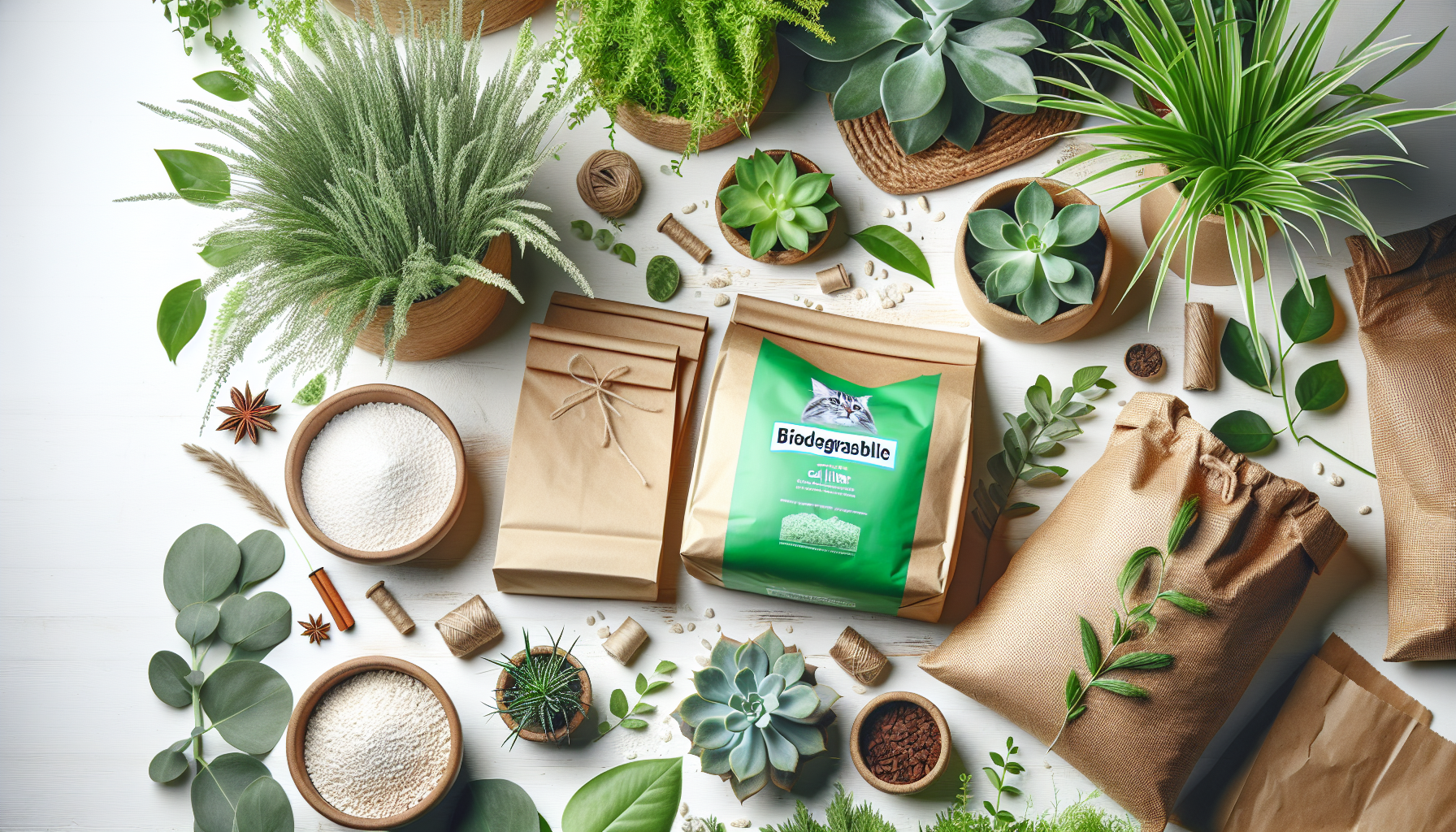
If you've switched to a biodegradable litter and started wondering whether you can toss the scooped waste onto your compost pile, you're asking the right question — and the honest answer is more complicated than most packaging lets on. Some cat litters genuinely belong in a compost heap. Others will ruin your compost, attract pests, or — worse — create a public health risk that no eco-conscious owner wants sitting under their tomato plants.
This guide breaks down exactly which cat litter materials are compostable, which are not, and the one rule that determines whether composting your cat's waste is safe in your situation at all.
Which Cat Litters Are Actually Compostable
Not all biodegradable litter is compostable, and not all compostable litter is safe to use on food crops. The distinction matters. Here's how the main materials stack up.
Pine litter — Made from compressed sawdust or reclaimed lumber byproduct, pine pellets break down cleanly in a compost pile. They're one of the best candidates for home composting. The natural terpenes in pine also inhibit some of the bacteria responsible for odour. If you're already feeding your compost heap wood chips, pine litter fits right in. Check pine litter options on Chewy →
Wheat litter — Wheat-based litter is fully biodegradable and breaks down quickly in a hot, active compost pile. It clumps naturally using plant starches, which means the clumps themselves will decompose rather than leaving behind a hardened lump the way clay does.
Corn litter — Corn breaks down faster than almost any other plant-based litter. The catch is moisture: corn litter in a damp, poorly aerated compost pile can turn into a smelly, anaerobic sludge before it decomposes. You need a properly managed pile, not a passive heap.
Paper litter — Recycled paper litter composts readily. It's already partially broken down from the manufacturing process, so it integrates into a compost pile fast. The trade-off is that paper litter holds a lot of moisture, which can throw off the carbon-to-nitrogen balance if your pile is already wet.
Grass seed litter — Grass seed litter is biodegradable and composts well in an active pile. It clumps effectively and breaks down without leaving residue.
Tofu litter — Tofu litter is one of the newer options and is fully compostable. It dissolves in water, which means it also breaks down quickly in a moist compost environment. It's not yet widely available in every market, but it's growing fast.
Which Cat Litters Are NOT Compostable
These materials will not break down in a compost pile — and some of them will actively contaminate it.
Clay litter (sodium bentonite) — Clay is a mined mineral. It does not decompose. It will sit in your compost pile indefinitely, and when it gets wet it will swell into a dense, concrete-like clump that suffocates the rest of your pile. Never compost clay litter.
Silica gel crystal litter — Crystal litter is made from amorphous silicon dioxide. It's non-toxic but it is not biodegradable. It will not break down in a compost pile and should go in the bin, not the heap.
Any litter with chemical deodorizers or fragrances — Even if the base material is biodegradable, added fragrances, antimicrobial coatings, and chemical deodorizers do not belong in compost. They can kill off the beneficial bacteria doing the work of decomposition and contaminate the finished compost.
Clumping litters with sodium bentonite blends — Some "natural" litters are blended with clay to improve clumping. If the label mentions bentonite or clays, it's not suitable for composting even if the primary ingredient is plant-based.
The Real Problem: Toxoplasma gondii
Here's the part most guides skip or bury in a footnote. Even if your litter is fully compostable, the waste in it carries a real risk: Toxoplasma gondii.
Cats are the primary host for this parasite. Infected cats shed oocysts in their faeces for a short window after initial infection. These oocysts are hardy — they can survive in soil for over a year, and they are not reliably killed by the temperatures a typical home compost pile reaches.
This is why most public health authorities and composting organisations recommend against composting cat faeces for use on food crops. A well-managed hot compost pile that sustains 55°C (130°F) or higher for several days can kill the oocysts, but most home compost piles never reach or hold that temperature reliably.
If you want to compost cat litter, the safe approach is a dedicated, separate compost system used only for non-food ornamental plants — never for vegetables, herbs, or anything you intend to eat.
How to Compost Cat Litter Safely
If you've confirmed your litter is a compostable material and you're willing to manage a separate system, here's how to do it properly.
1. Use a separate bin. Do not mix cat litter waste into your main compost pile. A dedicated bin — ideally one with a lid and some distance from your food garden — keeps the risk contained.
2. Strip out the solid waste. The litter itself composts readily. The faeces are the risk. Some owners compost only the soiled (urine-soaked) litter and dispose of solid waste in the bin. This reduces the parasitic risk substantially.
3. Balance the carbon. Most plant-based litters are high-carbon (brown) material. Mix them with nitrogen-rich (green) material like grass clippings or kitchen scraps to keep the pile active. Paper and pine are very high carbon — they need more greens than you might expect.
4. Let it mature for at least 18 months. Home composting cat litter is a long process. Even after the pile looks finished, give it an extended curing period before using it. The longer it sits, the lower the residual risk.
5. Never use it on food plants. Use finished compost only on ornamentals, lawns, or trees you don't harvest from. This is the single most important rule.
The Honest Verdict
Can you compost cat litter? Yes — if the material is genuinely compostable, and if you're willing to manage a separate, longer-maturing compost system that never feeds food crops. For most owners, that's more work than it's worth, and the safer path is to use biodegradable litter and dispose of it in the bin. But if you're already running an active hot compost setup and you want to keep organic waste out of landfill, compostable cat litter is one of the few household streams that genuinely fits.
The wrong move is assuming "biodegradable" on the bag means "toss it in the pile." It doesn't. Read the material, check for clay or chemical additives, and keep the finished compost well away from anything you plan to eat.
Quick Reference: Compostable vs Not
Compostable: pine, wheat, corn, paper, grass seed, tofu, hemp.
Not compostable: clay (sodium bentonite), silica gel crystals, any litter with chemical fragrances or antimicrobial additives, blended clay-plant litters.
Safe use of finished compost: ornamental plants, lawns, non-edible gardens only. Never food crops.
If you're choosing a litter with composting in mind, the simplest swap is from clay to a single-ingredient plant-based litter. View biodegradable litter options on Amazon → — just read the ingredient list before you commit, because the marketing on the front of the bag rarely tells the full story.